Showing posts with label Action. Show all posts

24 April 2009

Issue and Action: Malaria

Tomorrow (April 25) is World Malaria Day, so of course: Let's talk about it.


(This photo is from the Bill & Melinda Gates Foundation photo gallery.)

This is how it happens: Malaria is caused by a microscopic parasite that is carried by infected mosquitoes. When an infected mosquito bites a person, the parasite goes straight to the person's liver and begins to reproduce, then the infection is passed throughout the body through the blood stream. If the parasite arrives in the brain, cerebral malaria (which may lead to a coma and permanent neurological damage, and may be fatal) occurs.

Every 30 seconds, a child dies from malaria. Worldwide, malaria exists in 109 countries (which, combined, are home to half of the world's population) and kills a million people every year. In Africa specifically, malaria kills more children than any other disease. Overall, 90 percent of the people who die of malaria live in Africa. As is the case with so many public health issues, children are disproportionately affected by malaria.

Of course, even if a person doesn't die of malaria, there can be long-term effects just from contracting the disease. Globally, there are an estimated 350 to 500 million cases of malaria every year. Children who survive a case of cerebral malaria may suffer from long-term learning impairments or brain dysfunction. Also, malaria can cause anemia in children, which makes them more vulnerable to diarrhea, dehydration, and respiratory illnesses--which can, as we've seen in previous posts, be fatal in areas without ready access to health care, clean water, and adequate nutrition. Also, pregnant women (another high-risk population) who contract malaria have higher infant mortality rates, and their babies may be born with dangerously low birthweights.

You can imagine the toll that this disease takes on communities and nations; Africa loses an estimated $12 billion every year because of malarial infections.

One of the best-known (and simplest, and cheapest) ways to prevent malaria is to promote mosquito control initiatives. Distribution of insecticide-treated mosquito nets have been shown to have a remarkable effect on decreasing malaria. Technological innovation has made these nets more effective; old nets sometimes had to be re-sprayed with insecticide every six months, but the new nets are extremely effective. This, in combination with simple public health efforts such as removing standing water from the vicinity of homes (since mosquitoes breed near standing water), is crucial toward preventing malaria.

Other crucial initiatives involve improving access to drugs that treat malaria (which at present may be hard to come by, or too expensive). Other organizations are working to develop other prevention strategies (such as a malaria vaccine). The international community is working toward a goal of near-zero deaths from malaria by the year 2015. Obviously this will require concerted effort--and commentators seem divided on whether it is possible at this point--but many organizations are working toward this goal.

Recent data suggest that things are already changing, in some target countries, even faster than anyone expected. For instance, in Zambia, malaria deaths have been cut by two-thirds! And countries like like Rwanda and Ethopia are registering significant declines in their child mortality rates, attributable to the widespread distribution of bed nets.

I love these figures; I love to tell them to people who try to tell me that making donations to public health NGOs doesn't make a difference. Because if you choose your organizations wisely, your small donations really can contribute to difference-making.

If you're interested in learning more or donating to one of these organizations, here are some good ones to check out:
Bill & Melinda Gates Foundation
The Global Fund to Fight AIDS, Tuberculosis and Malaria
Nothing But Nets
Malaria No More

Also, if you have ten seconds to spare, you can sign this proclamation indicating your support for President Obama's promise to make ending malaria a national priority in the USA.

And if you have ten dollars to spare, you can donate an insecticide-treated mosquito net to an African country (and receive a woven African bracelet as a gift).

09 April 2009

Action: Genocide Prevention Month

April is Genocide Prevention Month. April 7 marked the 15th anniversary of the Rwandan genocide, where nearly one million people were slaughtered in three months. Other genocides have begun in April, too--the Holocaust, the Armenian genocide, the Srebrenica massacre in Bosnia. Genocide Prevention Month was established in the United States to be a period of remembrance, and also a period of activism directed toward fighting the forms of genocide that are happening today.

(By the way, if you're interested in the nitty-gritty definition of genocide, click here.)

Over the next couple of weeks, I'll be putting up several posts with suggestions on how you can commemorate Genocide Prevention Month, and turn it into an opportunity for activism. This post, though, is going to focus on what I view as the heart of everything: Education. The first thing I want you to do this month is to read a book and watch a movie. Learn more about genocides that have occurred; feel it.

1) Read a book. The Genocide Prevention Project and the American Booksellers' Association have created a list of "Books of Conscience" that will give you insight into past and current conflicts and genocides. I'm going to post the list in its entirety here, but please be aware I haven't read most of these books.

ABOUT GENOCIDE


A Problem From Hell: America and the Age of Genocide by Samantha Power

The Sunflower: On the Possibilities and Limits of Forgiveness by Simon Wiesenthal

ARMENIA

The Bastard of Istanbul by Elif Shafak

Forgotten Fire by Adam Bagdasarian

A Shameful Act: The Armenian Genocide and the Question of Turkish Responsibility by Taner Akcam

BOSNIA

The Cellist of Sarajevo by Steven Galloway

The Hemingway Book Club of Kosovo by Paula Huntley

Zlata's Diary: A Child's Life in Wartime Sarajevo by Zlata Filipovic

CAMBODIA

Children of the River by Linda Crew

First They Killed My Father: A Daughter of Cambodia Remembers by Loung Ung

DARFUR

Darfur: A Short History of a Long War by Julie Flint and Alex de Waal

Darfur Diaries: Stories of Survival by Jen Marlowe, Aisha Bain, and Adam Shapiro

The Devil Came on Horseback: Bearing Witness to the Genocide in Darfur by Brian Steidle, Gretchen Steidle Wallace

A Long Day's Dying: Critical Moments in the Darfur Genocide by Eric Reeves

Not on Our Watch: The Mission to End Genocide in Darfur and Beyond by Don Cheadle, John Prendergast

The Translator: A Memoir by Daoud Hari

THE HOLOCAUST

The Diary of a Young Girl: Anne Frank by Anne Frank, Susan Massotty (translator)

The Drowned and the Saved by Primo Levi

Maus I: A Survivor's Tale by Art Spiegelman

Night by Elie Wiesel, Marion Wiesel (translator)

Number the Stars by Lois Lowry

Survival in Auschwitz by Primo Levi

RWANDA

Africa's World War: Congo, the Rwandan Genocide, and the Making of a Continental Catastrophe by Gerard Prunier

Deogratias: A Tale of Rwanda by J.P. Stassen, Alexis Siegel (translator)

Say You're One of Them by Uwem Akpan

Shake Hands With the Devil: The Failure of Humanity in Rwanda by Romeo Dallaire

A Sunday at the Pool in Kigali: A Novel by Gil Courtemanche

We Wish to Inform You That Tomorrow We Will be Killed With Our Families
Stories From Rwanda by Phillip Gourevitch


ALSO OF NOTE

What Is the What: The Autobiography of Valentino Achak Deng by Dave Eggers

Let me recommend a couple of others that aren't on this list: When Broken Glass Floats: Growing Up Under the Khmer Rouge by Chanrithy Him, and Left to Tell: Discovering God Amidst the Rwandan Holocaust by Immaculee Ilibagiza.

This is why I love to read: I believe that reading breaks down the barriers between groups and peoples. It gives us the chance to see from behind someone else's eyes, to get inside their skin. It humanizes everyone, including the reader. And I like to believe that this process--of humanization and the destruction of superficial barriers--is a crucial part of creating a world where genocide is unthinkable. So do a little something to get more human: read a book of conscience this month.

2) Watch a film. A good film does the same thing as a good book; it puts you into another place and time and makes you capable of feeling what someone else feels. I'm going to list some that I can vouch for personally, and others that I haven't seen but have heard recommended. Some of these films are feature/fiction films, and some are documentaries. Some are about the genocides listed above, and others just share similar themes.

FILMS I HAVE SEEN:
Schindler's List
Hotel Rwanda
War Photographer
Pray the Devil Back to Hell
Rabbit Proof Fence
Life is Beautiful

FILMS I HAVEN'T SEEN (but have heard recommended):
The Devil Came on Horseback
The Killing Fields
Sometimes in April
Darfur Now
Blessed is the Match
My Neighbor My Killer
Ghosts of Rwanda
The Diary of Anne Frank
Shake Hands With the Devil: The Journey of Romeo Dallaire

Feel free to list other recommendations of books and movies in the comments section! And if you'd like to write a book review or film review for this blog, just let me know!

26 January 2009

Issue and Action: Child Survival

Today I received a link to the 2009 letter from the Bill and Melinda Gates Foundation. I have been consistently impressed with the types of projects the Foundation takes on--and I love their motto, "All Lives Have Equal Value"--so I enjoyed reading Bill Gates's open letter describing the Foundation's successes and failures over the past year. You can read the full text of the letter here.

I was especially interested in the segment on preventing childhood deaths. This is a big deal to me. Some days I wake up and look at my one-year-old daughter and feel overcome with gratitude that she is still here with me; I often feel hyper-conscious of the nearly 11 million children who die before reaching the age of five every year. That's 29,000 children a day (21 children every second) who die, mainly of preventable causes. Every one of those children is as real and warm and tangible to their parents as my daughter is to me. This graph (from the letter) gives a breakdown of the causes of these childhood deaths:


As you can see in the graph, more than half of the child deaths are caused by diarrheal diseases and dehydration, pneumonia and malaria. All these illnesses are preventable and treatable. Sometimes Westerners are surprised to hear about the gravity of diarrhea, in particular, in less-developed regions of the world, but for children who are undernourished and continually exposed to risk factors (like unclean water supplies) these diseases can be death sentences.

Here's some good news: Child mortality rates is one area where great progress has been made over the past 50 years. Here's another graph from Bill Gates' letter:


Amazing, right? The rate of childhood deaths has been cut in half, thanks to fifty years of hard work by many individuals, communities, organizations and entities. What this statistic says to me is that we have the technology and experience to completely eliminate preventable childhood deaths. Diarrheal dehydration can be eliminated when communities have access to clean water supplies, when breastfeeding is encouraged, and when simple rehydration strategies are employed for children who have diarrhea. Pneumonia can be prevented through adequate nutrition and improved sanitation, and the treatment for pneumonia is well-established, which makes it a question of making that treatment easily accessible for all the world's families. And malaria can be prevented with the use of treated mosquito nets and antimalarial medications, as well as vector control. Treatment for malaria exists but needs to be made more widely available in order to save more people's lives.

One of my favorite initiatives to decrease child mortality rates is UNICEF's "I Believe in Zero" campaign. The idea is that with adequate resources and political will, we can improve distribution of existing technologies to ensure that ZERO children die of preventable diseases. Visit the website to sign a petition to President Obama, donate to the cause, and recruit your friends and associates (by putting a collection canister on your desk at work, or putting a banner or widget on your website or Facebook page, or getting the word out to your local media).

Please click here to sign a petition indicating your support for a Presidential Initiative to Accelerate Child Survival.

Then click here to access information about the Global Child Survival Act (introduced in the House and the Senate, H.R. 2266 and S. 1418). From the website you can send letters to your Senator and Representative.

And while you're at it, why not click here to access information about a host of other children's issues that you can become involved in? The U.S. Fund for UNICEF website makes it easy to lobby your officials and speak our on issues that are important to you because they are important to children.

I believe in zero. I hope you do, too.

29 November 2008

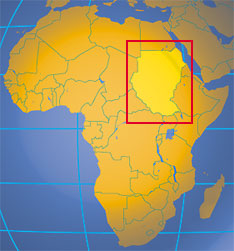
Country Profile and Action: Sudan

In my last country profile on Democratic Republic of the Congo, I mentioned the crisis in Sudan. I thought I'd already published this post, but as it turns out I forgot to post it to the blog. So reading this post on Sudan will hopefully give you more context on what I said about DRC!

Most Americans have heard a thing or two about the situation in Sudan. Back in 2004, the U.S. Department of State called the situation in Sudan "the worst humanitarian and human rights crisis in the world today." And things have not gotten better since then.

Over the past four years, an estimated 400,000 people have been killed in the Darfur region of Sudan. Another 2.5 million people have been displaced from their homes and are living in refugee camps. The people in refugee camps face all the hardships that refugees always face: Malnutrition, lack of education for children, lack of employment for adults, disease, rape, and violence. For those individuals still in their homes, they are at risk of being killed, tortured, systematically raped, and displaced. The situation in Sudan is being termed a genocide because of ethnicity-based killings (compared by some to what occurred in Rwanda), and there are no signs that things are improving. The stories of violence coming out of Darfur are atrocious. In one 2004 study, 61 percent of Sudanese respondents said they had witnessed the killing of a family member.

Sudan has been in a state of war for decades. In reality, modern conflicts between northern peoples and southern peoples can be traced back to the British colonial period. In the 1800s, European powers (mostly the French, British, Portuguese, and Belgians) basically divided the African continent between them, arbitrarily drawing country borderlines with no regard for tribal boundaries or land use issues. The Sudan was formed to include a huge geographical area (one-fourth the size of the United States), with Arabs living in the north and black Africans living in the south. (These ethnic labels are a little oversimplified, but they will do.) The British then forbade the Muslim Arabs to proselyte the southern people, and sent Christian missionaries instead. (To this day, Sudan is ethnically and religiously divided, Muslims in the north and Christians in the south, and this divide is at the root of many ensuing conflicts.)

When Sudan gained independence in 1956, virtually all of the government posts were held by northern Arabs (who are the minority population-wise). Southern people often felt (accurately) that their interests were not represented by the government. A series of conflicts arose over land use issues (like when the government planned to build a dam that would divert the flow of a river that southern farmers needed). In 1983, fundamentalist Islamic law was declared as the general policy of the country, exacerbating the already-notable ethnic differences between the two populations. A civil war ensued and lasted for 2 decades, killing 2 million people.

But just as peace agreements were negotiated and the civil war was coming to a close, a new conflict broke out in the Darfur region. The current conflict has its roots in rebel groups who have accused the government of neglecting the Darfur region. There are reports of atrocities committed by government troops and by rebel militia groups (and this is complicated, because as time goes on the rebel groups are increasingly splintered). The group accused of committing genocide, though, is the Janjaweed (which means "devil on horseback"), an armed rebel group that has torn through Darfur raping women and children, stealing, bombing villages, and killing people based on their ethnicity.

I found this YouTube video that provides a pretty good overview of the factors contributing to the situation in Sudan. I am not, though, an expert in Sudanese history, so if any of you notice an inaccuracy or would like to add to anything to what this video says, please post a comment.


There are so many ways you can get involved in the grassroots movement to promote the end of ethnic cleansing in Sudan. This is a cause that has great popular support in the U.S. and is getting a relatively-large amount of publicity here (especially in comparison with other human rights crises of recent years). Here are just a few action suggestions (and you can find a very long list of additional ideas from Human Rights Watch at this website). Follow the links for more information about each suggestion:

* McCain and Obama, during the campaign, issued a joint statement promising resolve and action for Sudan; send President-Elect Obama a message asking him to make good on that promise.

* Watch "Darfur Destroyed." (I'm not tech-savvy enough to get it onto this blog.) Pass it on to friends. Encourage your friends to get involved.

* Sign up for periodic e-mail updates from Save Darfur. These e-mail updates contain information about developments in the Darfur region and calls to action that will help you be involved on an ongoing basis.

* Join a local grassroots group dedicated to the Darfur cause. Click here to search by zip code.

* Sign petitions and write letters. Click here to access a quick form letter, or, if you're feeling more ambitious, click here to get addresses for leaders in the Sudanese government, the UN Security Council, and the American government.

* Learn more. Again, there is tons of information available on the internet. One feature that I find to be particularly reliable and powerful is Voices from Darfur, on the Save Darfur website, that features a few Sudanese people telling their own stories.

If you have any other ideas on what our blog readers can do (or anything we should know about Sudan), please leave a comment!

03 November 2008

Action: Vote!

It's tomorrow: Election Day! The ONE Campaign has provided a handy chart comparing McCain's and Obama's positions on various issues related to international development and foreign aid. (Both candidates have some good things to say, but I think it's important that we know what they're saying.) The page also provides links to videos of both candidates speaking about global poverty, and more comprehensive information. Click here to check it out. (Sorry there's no info here about third-party candidates.) Have fun with your ballot box!

By the way...you guys are killing me with the lack of comments. Come on! Say something!

25 October 2008

Action: Trick or Treat for UNICEF

The United Nations Children's Fund (UNICEF) is one of the most far-reaching and respected humanitarian organizations in the world. I love UNICEF--I'll just come right out and say it. I did an internship at the UNICEF-Philippines country office (and I've seen their work in many other countries), and I am always amazed at how UNICEF really can get into places that other organizations can't. UNICEF focuses their efforts on children. Funds donated to UNICEF go to six key areas: Education, emergency relief, water and sanitation, health and immunization, HIV/AIDS, and nutrition. We'll be talking about all these issues in future blog posts, but for now you can click the links to get more information about the specific kinds of projects that UNICEF sponsors.

Every year, the U.S. Fund for UNICEF sponsors Trick or Treat for UNICEF. This is where kids take little orange boxes with them while trick-or-treating, collecting coins and donations for UNICEF. I'm sure many of you will be trick-or-treating this weekend, so it's a great opportunity for you to do a little fundraising while you're at it! To get an orange box, go to the Trick or Treat for UNICEF website. You can search by zip code for UNICEF's retail partners that have boxes available at their locations. Or, alternatively, the website also has a downloadable orange label that you can print out and paste on a canister to take with you.

The website
is also full of other kid-oriented resources and fact sheets, including ideas on what to say as you're encouraging people to donate. After you've collected the money, you can send it through a Coinstar machine, or you can donate online, by mail or over the phone.

In college, I worked with schools who were doing Trick or Treat for UNICEF, and it was fantastic. It's a really powerful teaching tool for kids: an opportunity to say, "Let's be grateful that we have access to clean water and enough food, because not all kids do," then watch your kids kick into do-something mode. Kids have an amazing natural impulse to get involved, and Trick or Treat for UNICEF gives them the chance to participate meaningfully in their global community. So get yourself a little orange box and hit the streets! If you do it, please post a comment telling us how it went.